Medicinal cannabis will be produced in São Paulo with public structure, says governor
Governor confirms that Furp will be responsible for the production of plant-based medications, amid announcement of R$ 379 million for municipal health

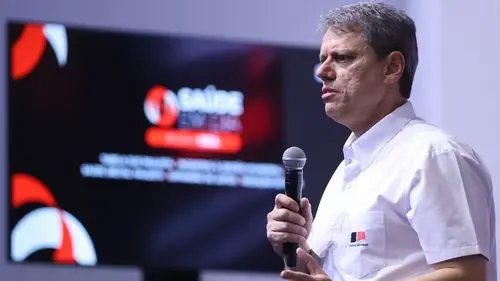
The governor of São Paulo, Tarcísio de Freitas (Republicans), stated on Thursday (30) that the state will produce medicinal cannabis. The announcement took place during a meeting at the Palácio dos Bandeirantes with mayors and health secretaries.
On that occasion, Tarcísio also confirmed the transfer of R$ 379.2 million in extra resources for the health of the 645 municipalities. The funds will be allocated to the Municipal Health Funds for costs and investments, aiming to expand services. The funding originates from transfers by parliamentarians and government indications. Symbolically, Mayor Meiri Catelani of Bady Bassitt received the "check" for the investment.

The role of Furp in cannabis production
One of the highlights of the speech was the projection for the Popular Medicine Foundation (Furp) to produce high-cost medications in the state, including those derived from medicinal cannabis.
“We will produce high-cost medications here in the state of São Paulo. We will produce cannabis here in the state of São Paulo. Using what we already have,” the governor stated.
Tarcísio mentioned the manufacturing plants in Guarulhos and Américo Brasiliense, with plans for full operation in both. The government intends to incorporate Furp into the Butantã hub. According to him, this could increase production from 400 thousand medications/year to 3 billion, saving R$ 270 million annually.
A new stance after veto
The statement comes 10 months after the Government vetoed bill 954/2023. The bill created a program for the production and distribution of cannabis-based medications in the state, which would be conducted by Furp.
The decision was signed by the acting vice-governor, Felício Ramuth (PSD), while Governor Tarcísio de Freitas was traveling in the United States. In his justification, Ramuth stated that the veto occurred because the creation and structuring of public administration bodies is the exclusive competence of the head of the Executive.
At the time of the veto, the state deputy and author of the bill, Caio França (PSB), lamented the government's decision. In a post by Portal Sechat, on Tuesday morning (04), the deputy celebrated the "recognition of the mistake" by the Governor. "I will be attentive to ensure that this production meets the pathologies that are still not covered by the São Paulo SUS," said França.
Access to medicinal cannabis in São Paulo
At the state level, the SUS already distributes products based on the plant, according to State Law No. 17.618/23. The process requires a prescription, evaluation by the Health Department, and signing a responsibility term, with supply limited to six months.
At the municipal level, the city hall of the capital is in the final phase to expand the prescription of cannabidiol in the public network. According to the Municipal Health Secretariat (SMS), more than 30 pathologies are included in this first phase, such as Parkinson's, Alzheimer's, and Multiple Sclerosis. The Technical Note SMS/SEABEVS No. 01/2025, which guides the work, is in the final phase of publication.
Municipalities like Ribeirão Pires are already advancing on the agenda. Six months after its inauguration, Brazil's first public medicinal cannabis clinic, located in the city, presents a positive balance. The unit has already conducted 499 consultations, registered 156 patients, and distributed 368 bottles of cannabis-based oil for free.